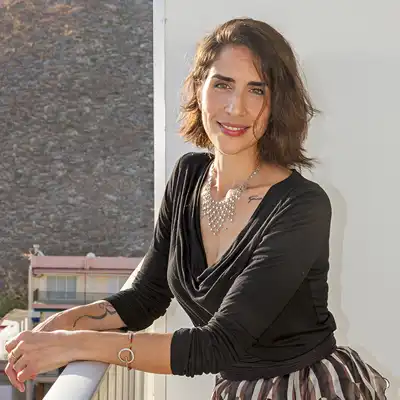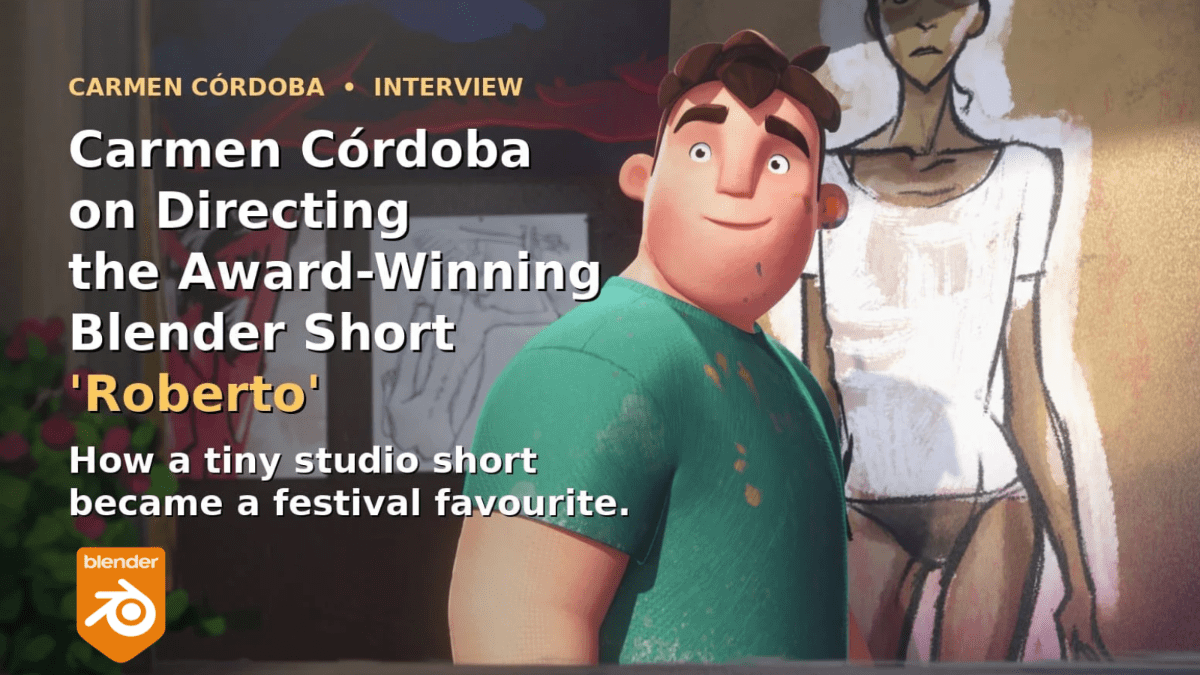
Roberto is an animated film made entirely in Blender. Since its premiere in August 2020, it has won more than 170 awards. We interviewed its director, Carmen Córdoba, a former computer engineer who left Madrid for Barcelona to pursue her dream of telling stories through animation.
Q: Tell us a bit about yourself. Why did you choose to pursue a career in the animation field? When did you realise you wanted to follow this path?
CARMEN: I have always drawn and told little stories through comics, but when it was time to go to university, I couldn’t find a clear path, so I decided to study computer engineering.
When I saw “Toy Story 1” in the cinema, I knew that was what I wanted to do, but for many years I kept that interest as a hobby.
Years later, an event in my life inspired the story of “Roberto”, and I knew that it had to become an animated short film. Since I knew nothing about animation then, I kept that story in a drawer, hoping to find a way to make it come true.
It was quite late (at the age of 33) when I found the way, or rather, I decided to leave everything (my professional career, my city, my recently bought flat, and my family and friends) to pursue my dreams.
I took several screenwriting courses, then moved from Madrid to Barcelona to study animation at Pepe School Land. When I finished the course, the school offered support for my project, so I decided to stay in Barcelona indefinitely.
Q: Roberto is your first short film. How was this adventure? Was it exciting to follow this project from start to finish?
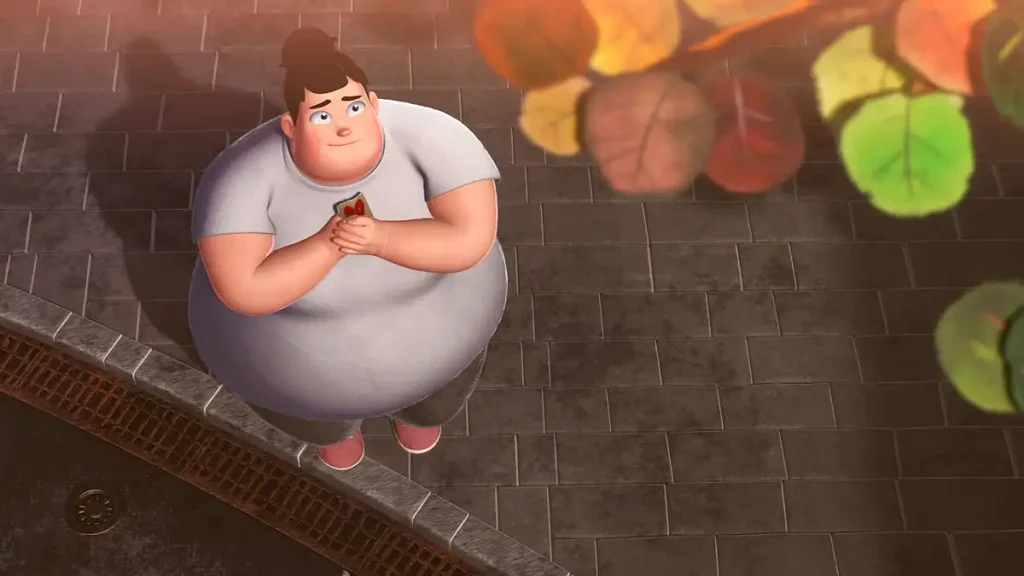
CARMEN: It was an adventure on many levels: professionally but also personally. Roberto was my excuse to take a leap into the void and pursue my dream of telling stories through animation. He has meant enormous growth for me and helped me discover my abilities and what I really like to do.
When I started, I only knew I wanted to make “Roberto”, but I didn’t yet know which parts of the process I would love most; I wanted to be there from beginning to end to discover it.
The initial phase of creation was beautiful, but also very lonely. Opening the project to more people and making the team grow has been the best part of everything for me. I saw how each person made it their own and enriched it in ways I never imagined. I am blown away by how generous all the teammates have been, and it’s been so exciting.
Q: Body perception is a very complicated subject; it’s always difficult to talk about body positivity without risking trivialising the topic or using clichés. But this beautiful story handles this theme really well by surprising the audience and getting straight to the heart. What gave you the idea for this beautiful story? How did you get the inspiration?
In the story, Roberto’s art also helps Andrea make an inner journey. This short serves the same purpose: telling a beautiful story of hope through music and images. Do you think that with art and images it’s sometimes easier to convey feelings and emotions that we find hard to say with words?
CARMEN: The seed of all this was a chance encounter that changed my life. It was a long time ago, when I had, for a few years, a lot of absurd complexes about my physique and… well, about all of me in general. I met several times in a hospital with a boy who suffered from morbid obesity and who was clearly on psychiatric medication, and how the rest of the patients looked at him with rejection and morbid curiosity at the same time, transferring my own complexes and insecurities onto him as a prejudice… until one of those times I recognised that boy. It was Roberto, the older brother of my best childhood friend. I remembered how kind and sweet that boy was and also how much he had suffered due to family circumstances, and I understood how horrible my prejudices were. That was a revealing moment that marked a turning point in my life, and I felt there was a story worth telling to connect with other people.
The story has completely changed since that initial idea, but it still retains the message… and the name of the person who inspired it.
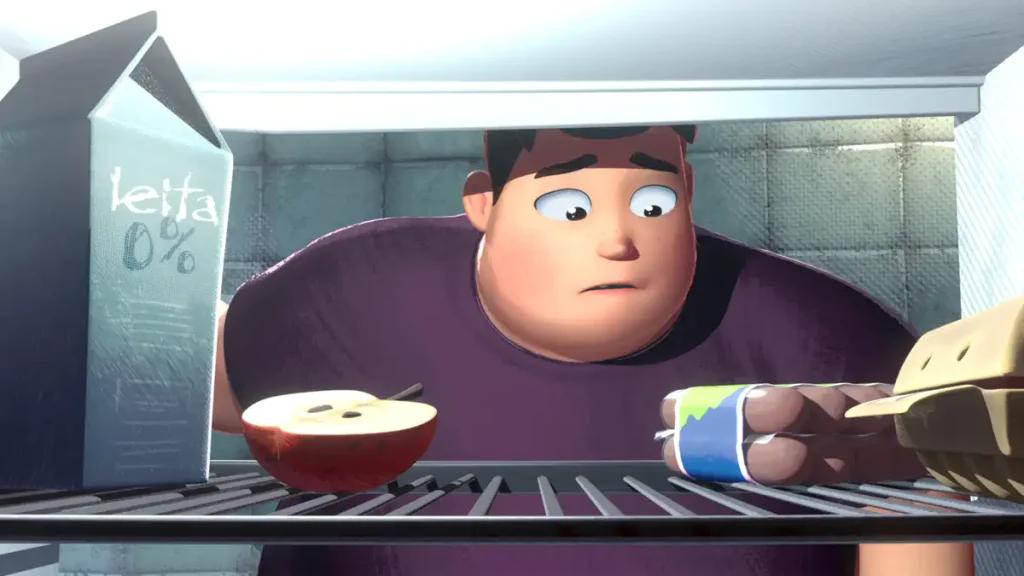
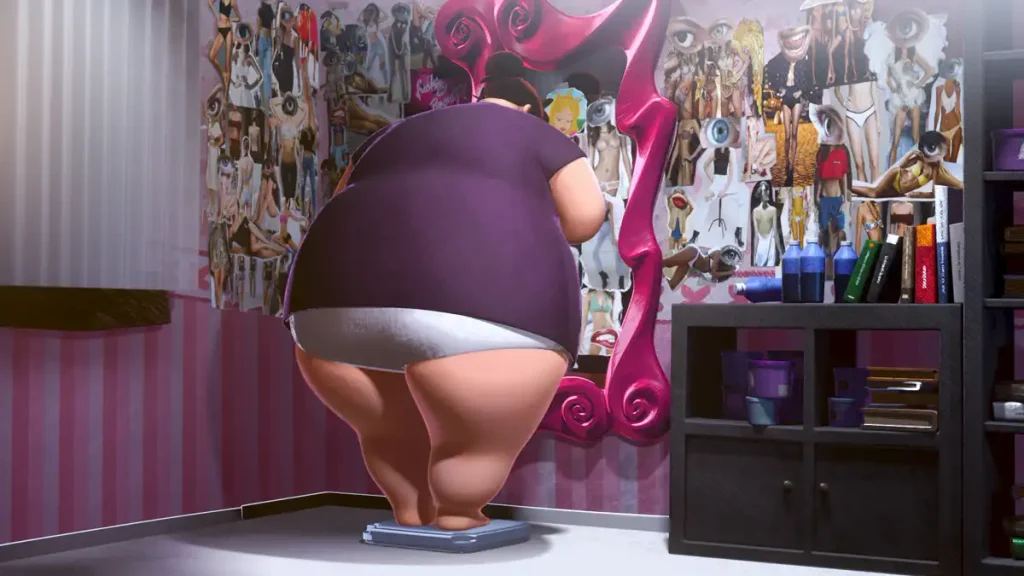
Q: One of the most distinctive aspects of the short is the shaders, which give the characters and environment a painterly look. Can you talk to us about that?
The visual development work was one of the parts of the project I enjoyed most because the responsible artist, Toni Mortar, was a gift from fate.
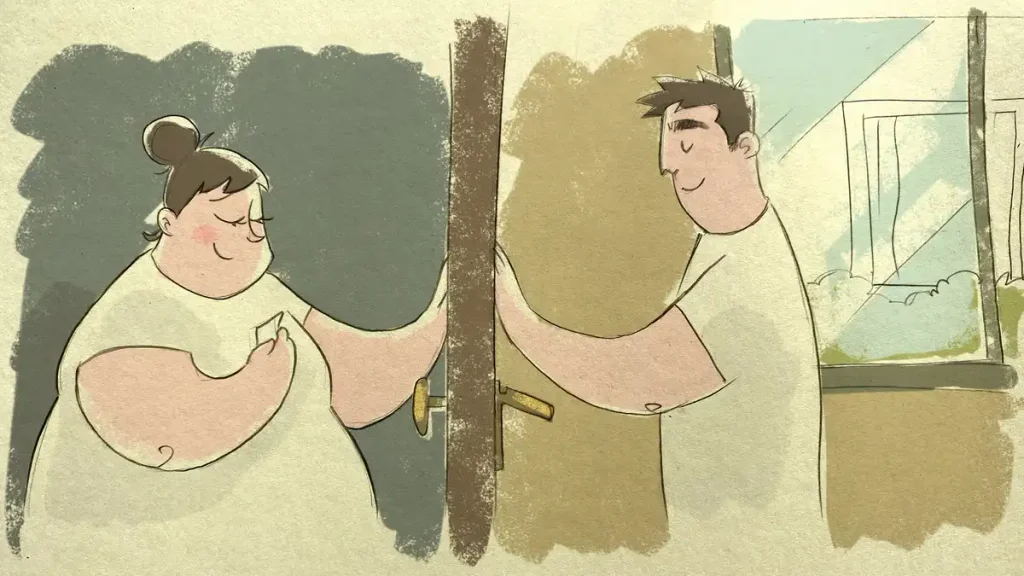
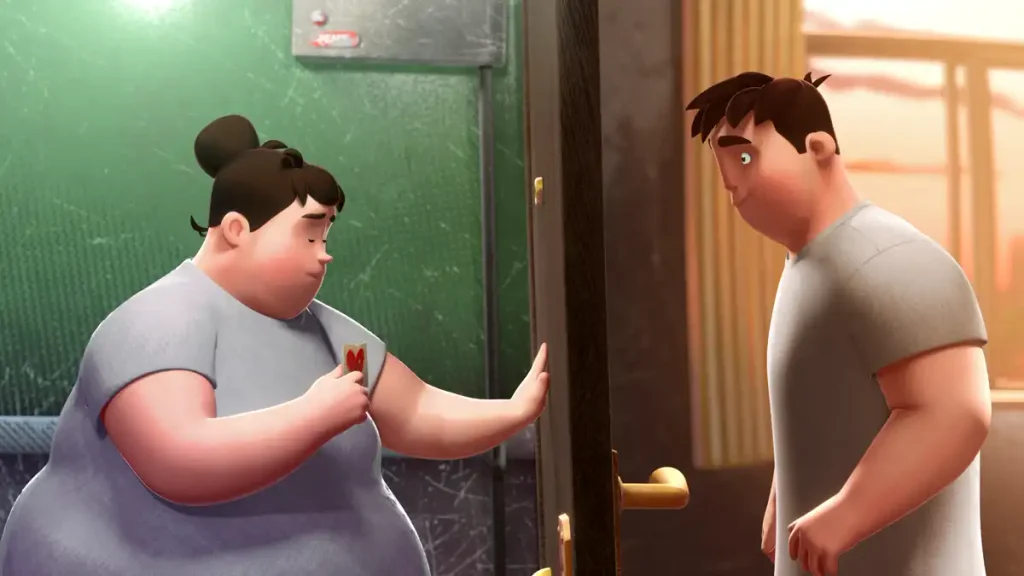
CARMEN: Since I had the idea that Roberto was a painter, I imagined the film with a more pictorial finish that would move away from the traditional 3D look, which would also evolve from when Roberto is a child (with a finish that is more reminiscent of crayons) until he is an adult (when it is closer to oil). With this, he sought to suggest that we see the world through the artist’s eyes. It was something that I think brings narrative to the mind, and it’s not just a visual appetite.
But I couldn’t find any render artist in my environment with the necessary Blender knowledge, and I almost gave up on the idea. But when we started the bulk of animation production, I saw the delay with one of the people I’d applied for as an animator, and I found a great render artist who accepted the challenge.
We spent 3 months full time doing R&D to find a finish that would work with the story, and when we had the first approximation, we went headlong into it, with Toni polishing the finish as we assembled the plans.
Q: What was the most complex technical aspect to deal with during production?
CARMEN: The visual development and… the change to version 2.80, which caught us in full production.
The introduction of the Eevee render engine and the improvements to Grease Pencil (the short has some scenes that integrate 2D animation) convinced us to risk changing the version, which meant working with unstable and changing versions for several months, and complicated the production pipeline a bit because the rigs that were built in 2.79 had some problems in the new versions, and that forced us to export caches.
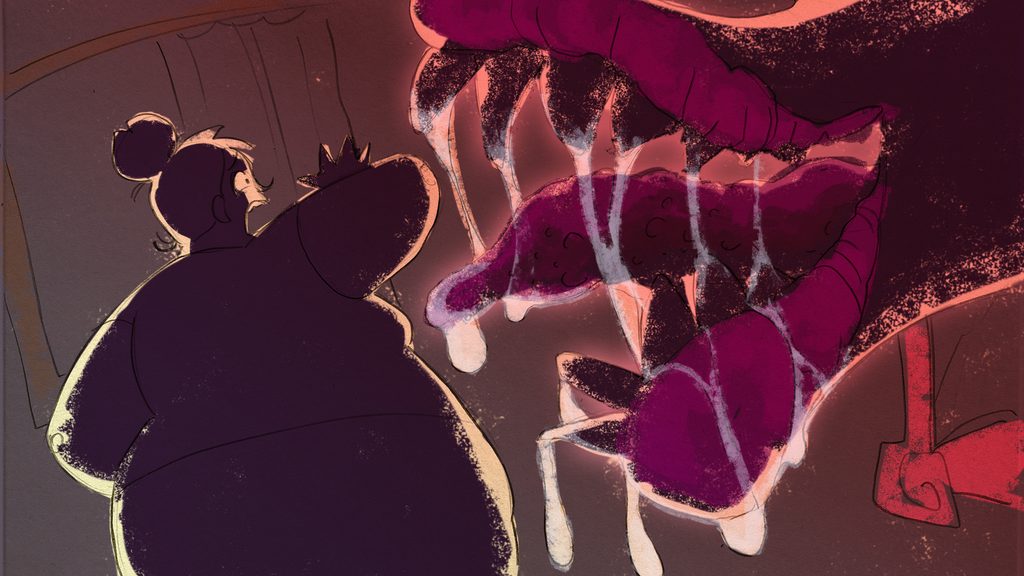
Q: Tell us about the team you made the short with.
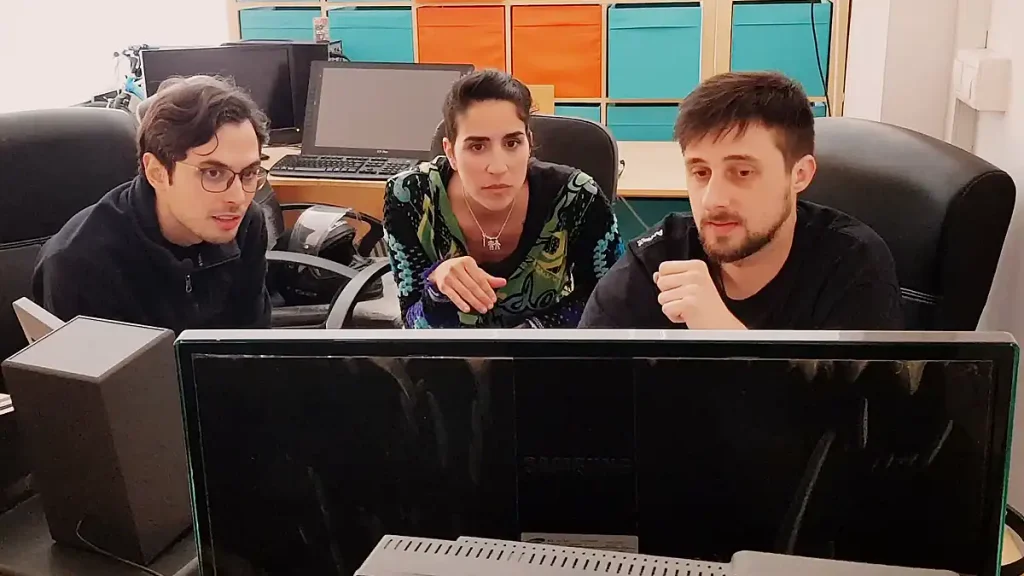
CARMEN: Roberto’s team has been a wonderful combination, and something that continues to surprise me is how a team formed one-on-one, who had never worked together before, has functioned so well. For me, it’s been incredible to share such a personal project with them, and also to see them enjoy it and grow with it. The vast majority of the team members had no prior professional experience, and I think we’ve achieved a very high level of quality. I believe that’s been one of the keys to our success in creating a short film that works so well, because the audience perceives all the love that went into it.
Q: When did you start using Blender?
CARMEN: I started using Blender at Pepe School Land, where I studied animation. Its director, Daniel Martínez Lara, is one of the most active members of the community, and in addition to teaching us how to use the software, he instilled in us a love for the community.
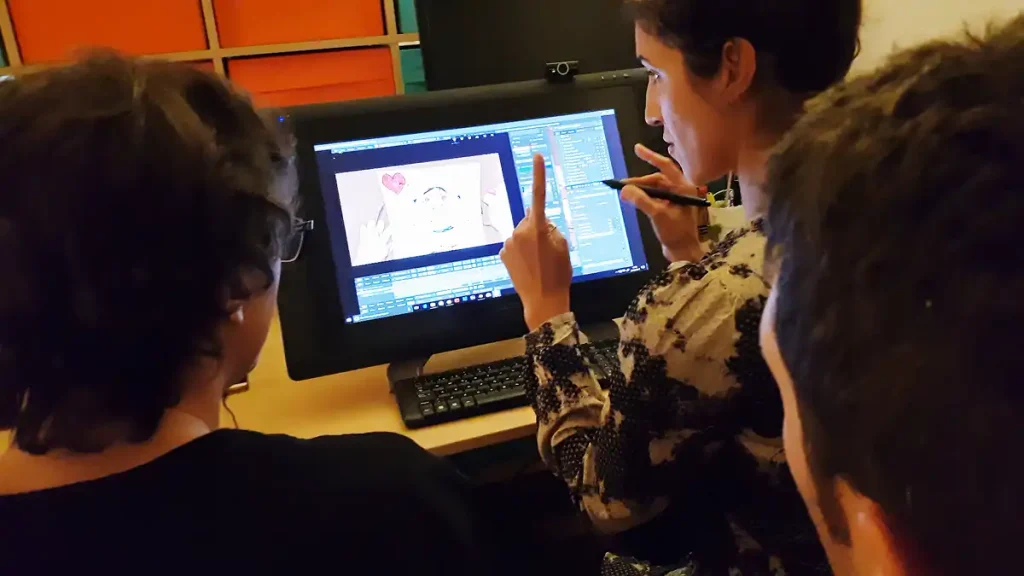
My experience during the course was so good that we decided to use it in Roberto’s entire pipeline: from animatics to montage.
Q: What are the strengths of this software in your opinion?
CARMEN: For me, the main strength is that it covers the entire pre-production, production and post-production process. It is really convenient to be able to do the entire process inside the same software, and it greatly simplifies the production pipeline.
Integrating traditional animation into a 3D environment is a really innovative and powerful approach, and it’s helping animation take a huge qualitative leap.
Eevee has also been a very important capability for us. With such a special, artistic finish, being able to work on lighting and shaders in real time has been essential to achieving that characteristic look. And of course, blasting render times has let us render the entire short on a single PC in days, saving us from render farms and, once again, simplifying the pipeline.
Q: You currently teach Blender courses at Pixelodeon 3D school. What do you think is the future of this software?
CARMEN: I recently entered the world of VR as a creation tool, and it is clear the future is headed that way. The interface is intuitive and powerful, and it breaks down walls, letting less technical artists access this software and the enrichment it brings. In layout, modelling, and animation, the saving of time and effort is surprising
Q: Do you already have any new animation projects in mind? Can you tell us something?
CARMEN: Two years ago (at the time of the interview) I became a mother, so inspiration is not lacking…
I am already working on pre-production for a new short film, this time in 2D animation, that explores the mother-child relationship and the cycle of life. It’s called “amarradas”, which could be translated as “roped”, and I’m very excited about it. I hope you can see it soon.
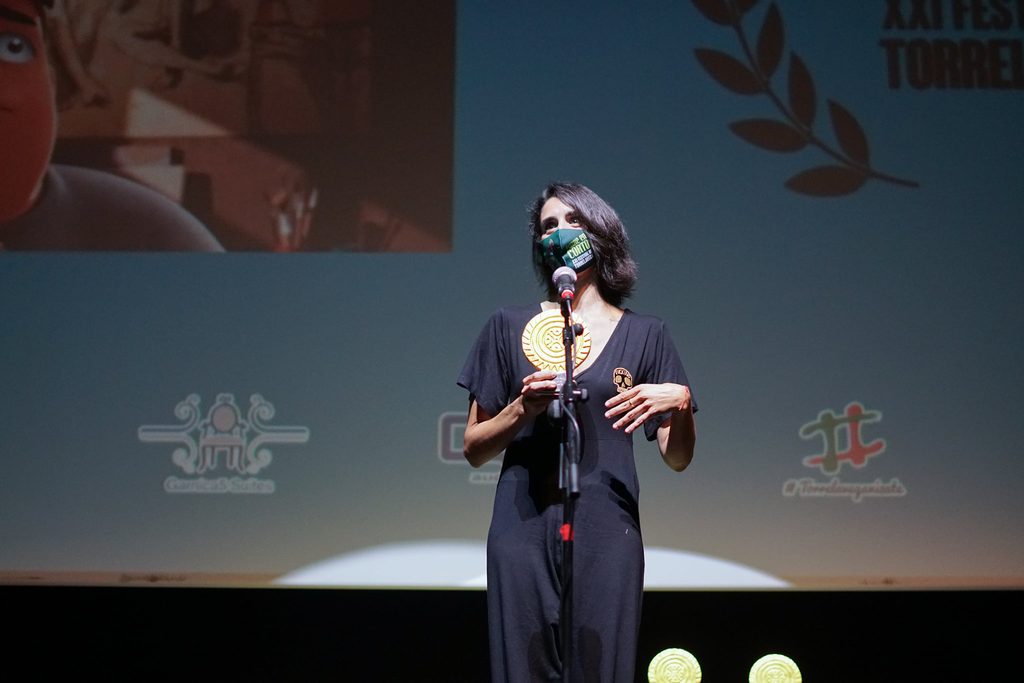
Roberto’s Achievements
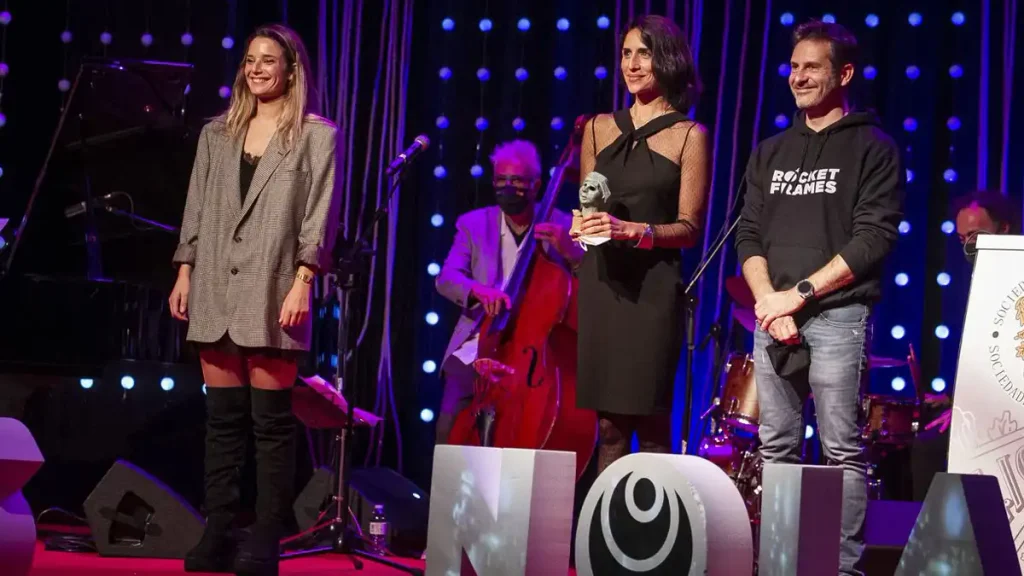
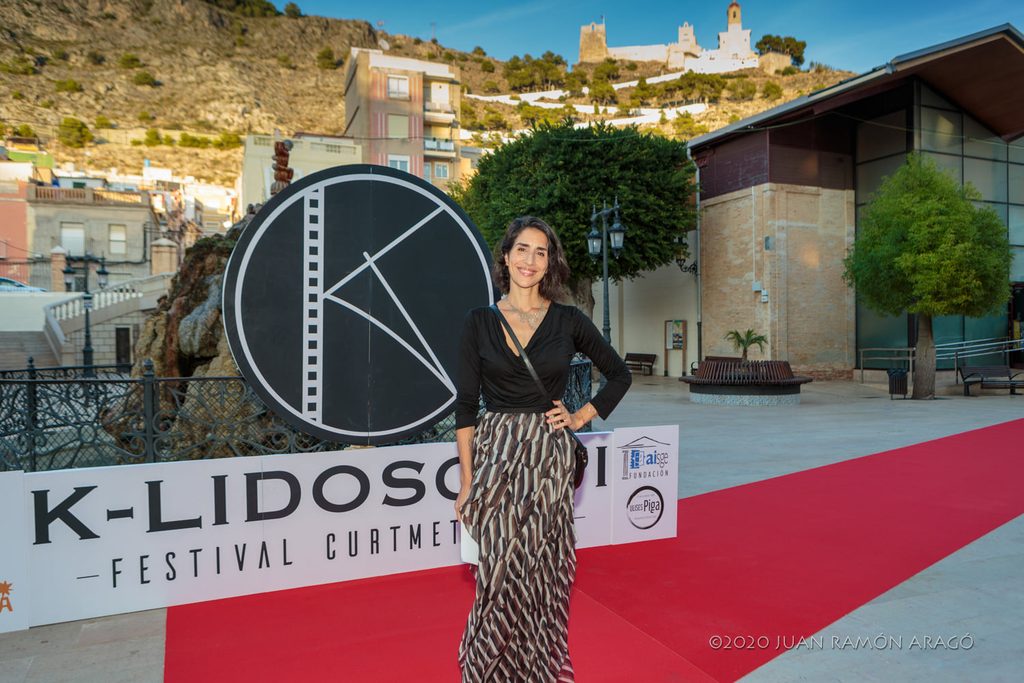
Since the premiere in August 2020, Roberto has received more than 170 awards and over 360 festival selections worldwide, making it one of the most awarded Spanish animated shorts of recent years. Among its achievements, it won Best Spanish Animated Short at Animayo 2021 and the Trick for Kids award at the International Festival of Animated Film Stuttgart in 2021. It also earned audience awards at the WEIRD Market 2020 and at the Animocje 2021 Films for Children Competition, along with the Best Family Friendly at the Queens World Film Festival 2021. Beyond the festival circuit, it was a finalist for Best Ibero-American Short Film at the 2021 Premios Quirino, a candidate for Best Animated Short Film at the 2021 Goya Awards, and was screened at several Oscar-qualifying festivals.
Carmen Córdoba’s links